
Are firms looking in enough places?
Every day, asset managers search for opportunities others have overlooked. They analyse markets, challenge assumptions and look beyond the obvious. But what if one of the industry's greatest untapped opportunities is not in a portfolio, but in people?
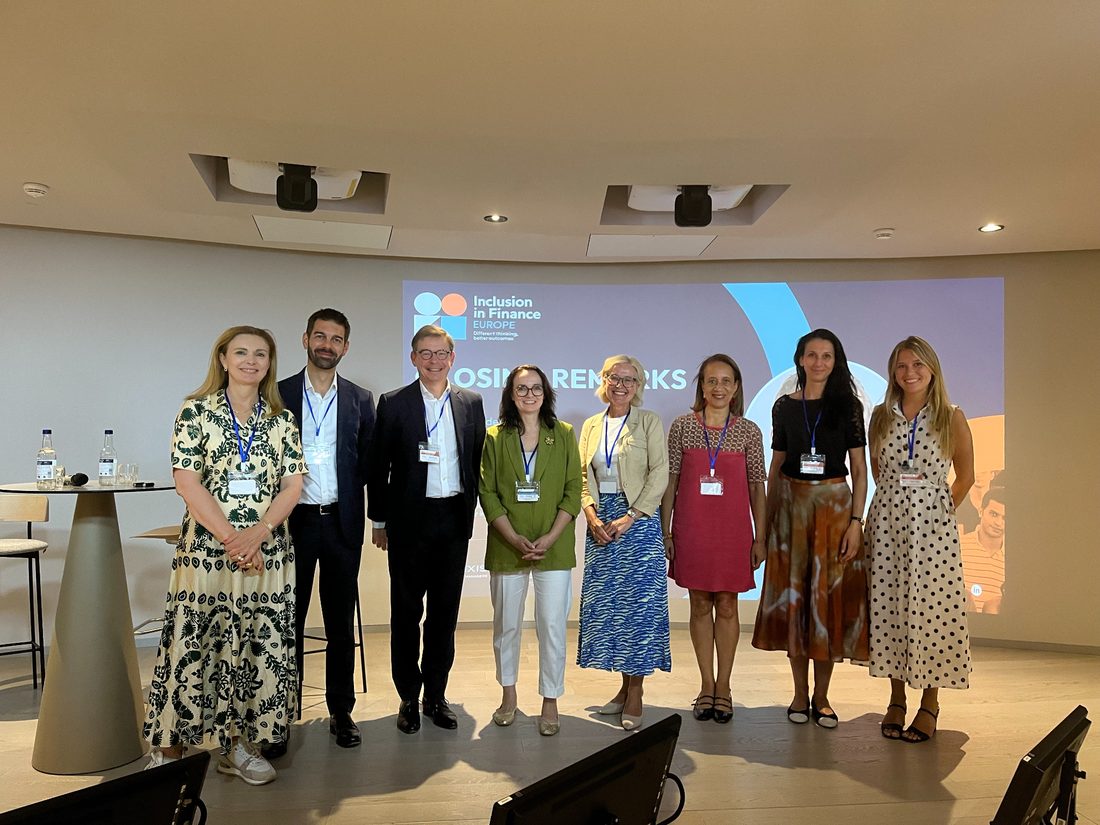
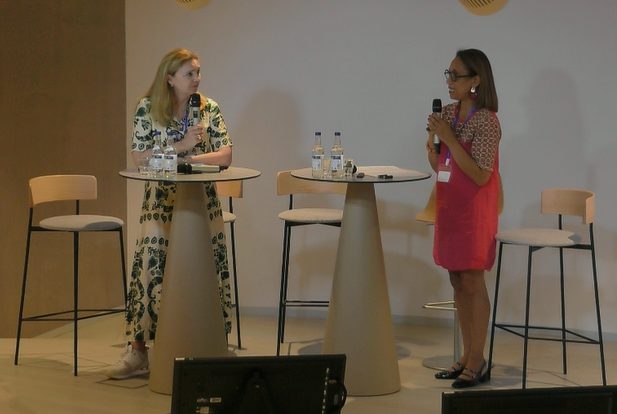
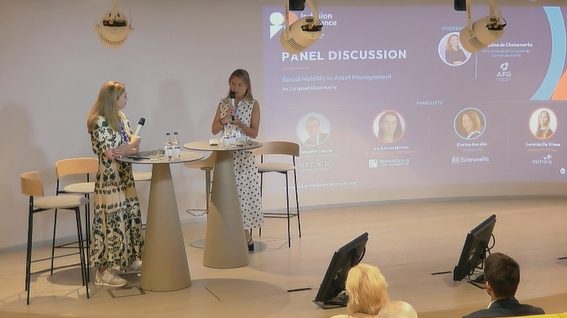
On 8 July 2026, Inclusion in Finance Europe brought together leaders from across the asset management industry in Paris to explore that question. Hosted by Natixis Investment Managers, in partnership with the Association Française de la Gestion financière (AFG) and Sciences Po, the discussion examined how social mobility can strengthen talent, inclusion and the long-term competitiveness of the industry. This article brings together the key insights from that discussion.
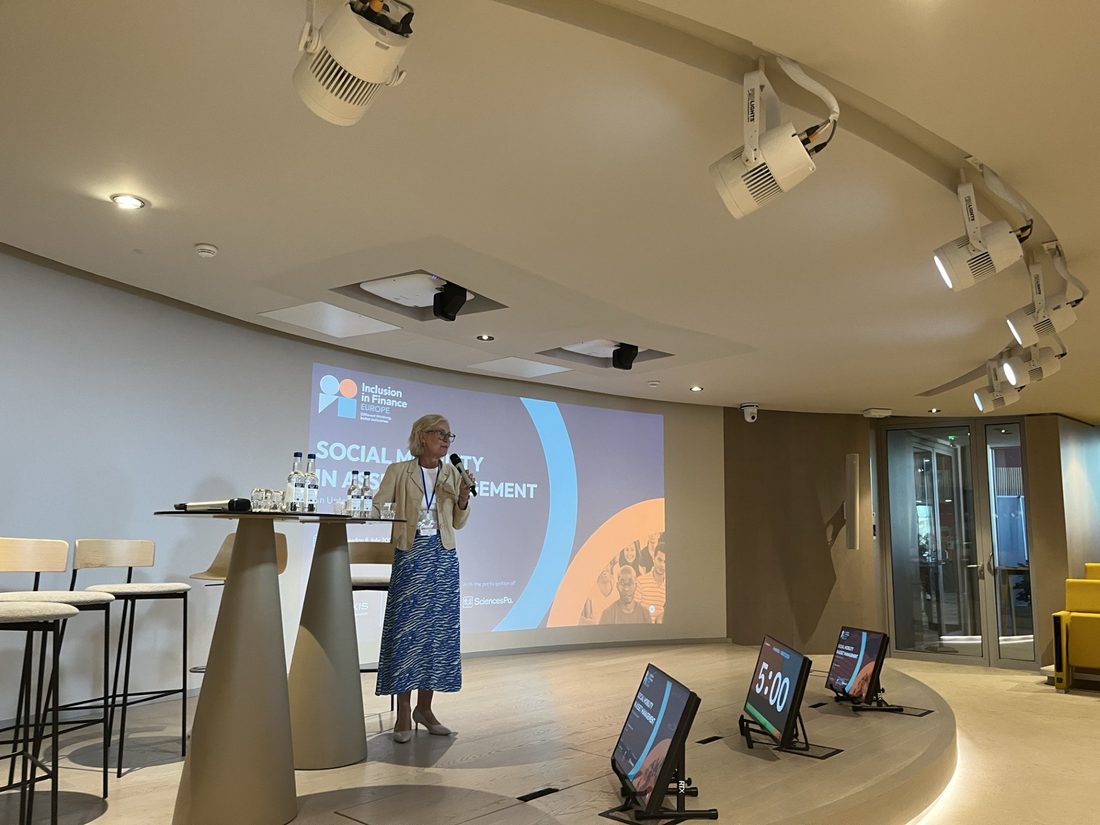
Opening the conversation, Nancy Rowe of Franklin Templeton, Lead of IiFE’s Social Mobility Community, invited participants to look beyond the traditional inclusion debate and consider a broader business question: how can the asset management industry ensure it is identifying talent wherever it exists?
Nancy positioned social mobility as a core dimension of inclusion, one that shapes who discovers careers in asset management, who enters the industry, who feels they belong and who ultimately progresses. Nancy’s opening remarks set the direction for the discussion. This was about ensuring the industry can identify talent potential wherever it exists.
Franklin Templeton · Lead, IiFE Social Mobility Community
If social mobility is becoming a business question, the next challenge is understanding where barriers actually exist. That begins with evidence.
Measure what matters
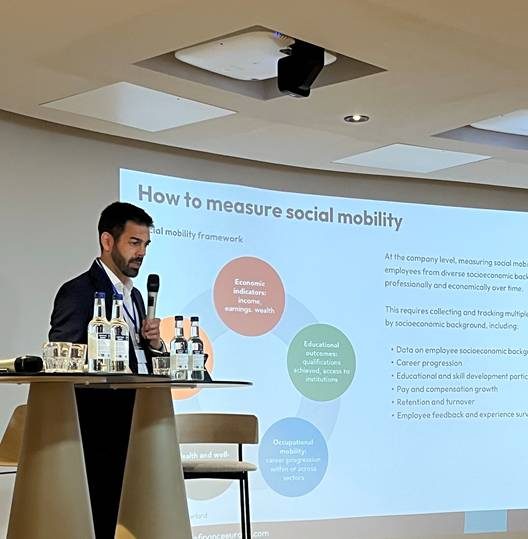
Research presented by Aidan Manktelow of PwC Switzerland challenged a comfortable assumption: organisations may believe they are recruiting the best talent available, but without data they cannot know who is being reached, or overlooked.
France illustrated the complexity. It ranks 12th on the World Economic Forum’s Social Mobility Index, yet around 62% of French executives come from professional or executive family backgrounds. Progress and persistent barriers can exist at the same time.
Across Europe, only around 20% of asset management firms currently collect socioeconomic-background data. That does not prove that firms are failing. It reveals that many cannot yet measure the barriers they want to remove.
2026 Inclusion in Finance Europe Social Mobility Report
The report provided an evidence base for the discussion, including industry data and the wider economic case for improving social mobility.
Data can reveal where opportunity narrows. The next question is what organisations choose to do with that knowledge.
From initiatives to strategy
Representatives from BNP Paribas Asset Management and Natixis Investment Managers brought the conversation from evidence to practice.
Their contributions pointed in the same direction: social mobility is becoming part of wider talent and inclusion strategies rather than a standalone initiative. The work spans career awareness, recruitment, development, mentoring and progression.
There is no single blueprint. Different organisations will build approaches that reflect their culture, workforce and business priorities. What matters is the shared ambition to remove unnecessary barriers and identify potential more consistently.
But firms cannot broaden access to talent if talented people never discover the industry in the first place.
Recruitment begins with aspiration
The Association Française de la Gestion financière (AFG) highlighted a fundamental challenge: for many young people, the asset management industry remains unfamiliar or invisible. The grounded takeaway from the discussion is not to assume exactly which careers they know about, but to recognise that the industry needs to explain itself more clearly.
Schools, universities, industry bodies and employers can help make career routes visible, show the variety of skills the sector needs and connect young people with professionals whose paths make those opportunities feel real.
Sciences Po, drawing on its Equal Opportunity Programme, showed why visibility is only the first step. Young people also need the confidence to believe that these careers are genuinely open to them.
From Sciences Po to Mirova
Lorenza De Vriese, a former Sciences Po student now working at Mirova, gave the discussion a human centre. Her journey reflected the path from education and aspiration to a career in the asset management industry.
Lorenza’s contribution showed that opening a door is only the beginning. People also need mentoring, encouragement, professional networks and a sense of belonging to navigate an industry that may initially feel unfamiliar. For those without inherited professional knowledge, that support can build confidence, help counter imposter syndrome and determine whether an available opportunity becomes a sustainable career.
Lorenza’s experience connected the education and employer perspectives: visibility created possibility; Sciences Po helped turn possibility into ambition; and professional support helped translate that ambition into achievement at Mirova.
Which leaves one final question: what does all of this mean for the future competitiveness of the asset management industry?
A competitiveness question
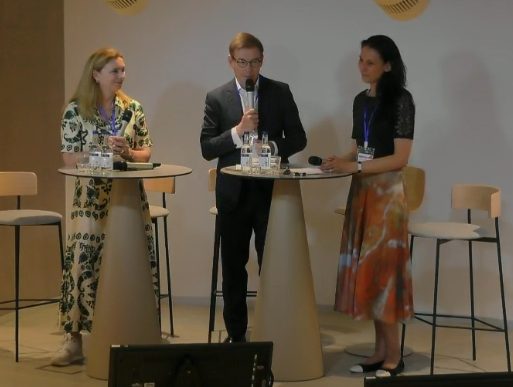
Closing the panel, Ric van Weelden, Chair of Inclusion in Finance Europe, connected the discussion to the wider future of the industry.
Demographic change is reshaping the workforce. Artificial intelligence is changing the skills organisations require. Competition for talent is intensifying. Every strategic ambition, from innovation to digital transformation, ultimately depends on people.
The discussion did not suggest that social mobility is a single answer to every talent challenge. It suggested something more useful: firms should ask better questions.
Are recruitment and progression processes identifying potential wherever it exists? Are careers visible to people without established industry networks? Are talented employees supported once they enter the organisation?
The question is no longer whether social mobility matters. It is whether the industry can afford to ignore it.
From insight to collective action
The discussion in Paris reinforced one clear message: social mobility remains an untapped opportunity for the asset management industry.
Broader access does not mean lowering standards. It gives firms a better chance of identifying strong talent, building more resilient organisations and developing leaders with a wider range of experiences and perspectives.
The discussion was not intended to provide every answer. It opened the next phase of the work: understanding what effective action looks like across recruitment, development, progression and the wider talent pipeline.
That is the role Inclusion in Finance Europe (IiFE) seeks to play. Through its Social Mobility Community, future roundtables, expert discussions and IiFE Insights publications, IiFE will continue bringing together employers, educators and industry leaders to share evidence, test ideas and translate ambition into practical action.
Over the coming months, IiFE intends to convene further conversations on this topic. These will explore how the asset management industry can broaden opportunity while strengthening talent, competitiveness and long-term business performance.
From the Paris event