Beyond the firm: why cross-company mentoring matters for asset management | IiFE Insights
An Inclusion in Finance Europe publication

Beyond the firm: why cross-company mentoring matters for asset management

Asset managers search widely for investment insight. The same principle should apply to how the industry develops its people.

Key insights from Inclusion in Finance Europe’s Rise Across programme kickoff20 May 2026 · 9 min read

Led by
IiFE Gender Equality Community
Executive Sponsor
Nigel Cresswell, Quoniam
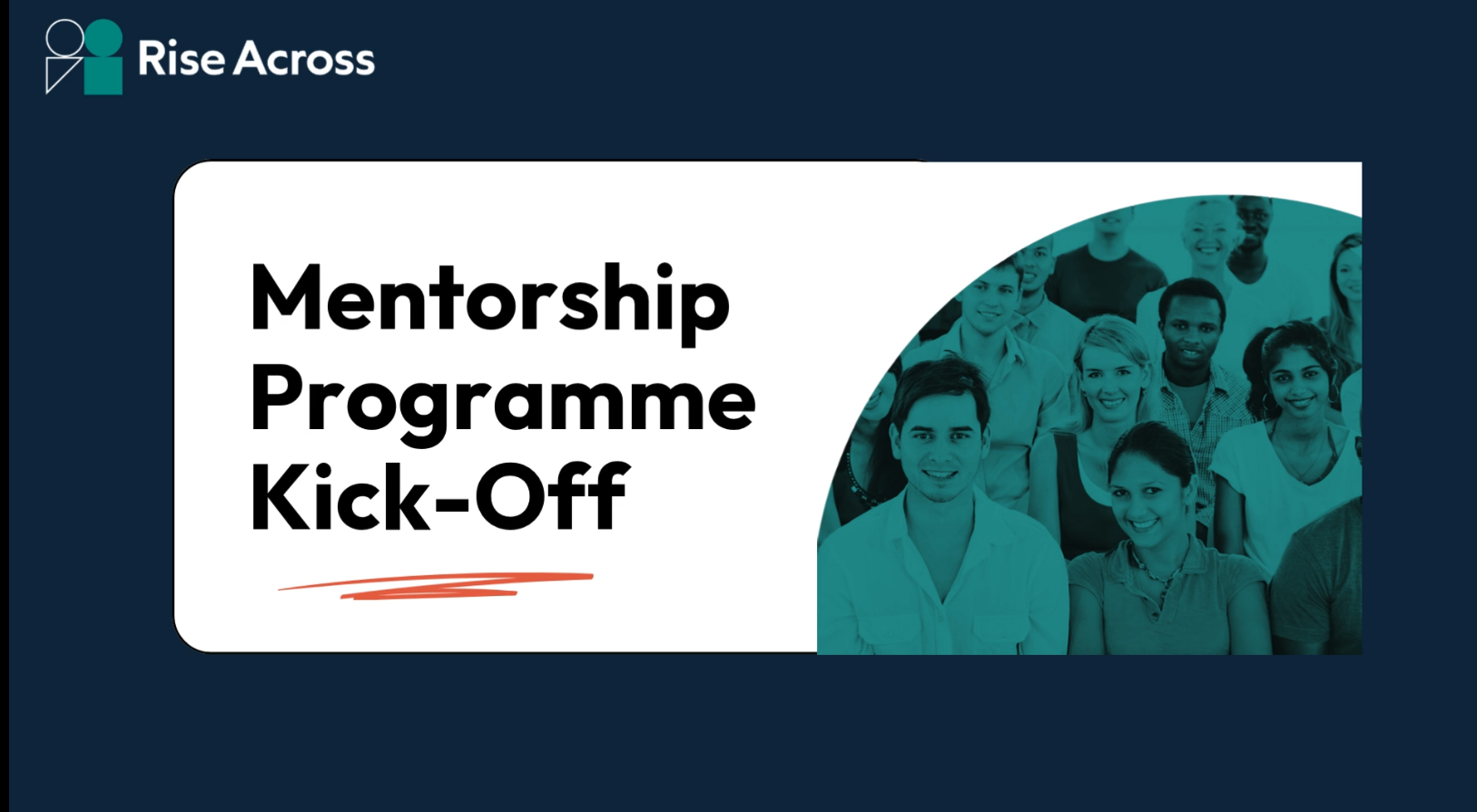
Rise Across Mentorship Programme Kick-Off presentation artwork featuring a diverse group of professionals.
Rise Across Mentorship Programme Kick-Off, 20 May 2026
1 · The opportunity

Are firms developing talent in too narrow a circle?

Asset management is built on the search for insight. Firms combine data, experience and different interpretations to reach better investment and business decisions. Yet when it comes to developing people, the industry often relies on a much narrower pool of perspective: the managers, sponsors and informal networks available inside one organisation.

Internal mentoring remains valuable. It helps people understand their firm, navigate its culture and build relationships close to their work. But it also operates within the assumptions, hierarchy and business model of that firm. The people best placed to challenge an individual’s thinking may sit elsewhere in the industry.

Rise Across, Inclusion in Finance Europe’s cross-company and cross-country mentorship programme, is designed to widen that circle. Its first cohort was launched on 20 May 2026, connecting female professionals across European asset management with mentors from different firms, markets, functions and career stages.

Asmus Tvede Madsen, IiFE’s Gender Equality Community Lead, explained that the programme was created to make the Community’s ambition tangible for member firms and their people. Rise Across was deliberately designed as more than another internal mentoring scheme: it reaches across organisations and borders, includes female professionals at different career levels and spans the breadth of roles within asset management.

“How do we create something really tangible for our member organisations and the individuals within them?”Asmus Tvede MadsenGender Equality Community Lead, IiFE · 20 May 2026

The programme reflects a wider business proposition. Inclusion and cognitive diversity can strengthen decisions, culture, client outcomes, talent and long-term performance. Cross-company mentoring translates that proposition into individual development by giving people access to experience they may not encounter within their immediate working environment.

The opportunity is not simply to create more mentoring. It is to make mentoring a channel through which knowledge, confidence and professional networks travel across the industry.

Ric van Weelden, Chair of Inclusion in Finance Europe, placed the phrase “cross-pollination” in a specific context. He explained that the value comes from matching people across organisational and geographic boundaries, exposing participants to perspectives shaped by different firms and business models.

“Your mentor or mentee, in many cases, will sit in a different country, at a different firm and in a different business model from yours. Cross-pollination is the point, and it is part of what makes Rise Across different from internal mentoring schemes.”Ric van WeeldenChair, Inclusion in Finance Europe · 20 May 2026
2 · The design

Difference can be a development asset

The pilot demonstrates what becomes possible when difference is treated as part of the design rather than a barrier to overcome.

44Mentor and mentee matches
10Countries represented
8Member firms
12Areas of work

Every match brings together people from different member firms, with at least one shared language and different levels of industry experience. The process also considered development priorities, personality, area of work and preferred meeting frequency.

The matching process deliberately combined difference with common ground. Pairs had to come from different member firms, share at least one language and have different levels of industry experience. The process then considered focus areas, personality, area of work, preferred meeting frequency and overlapping interests or goals.

IiFE editorial insight: The best match is not necessarily the most familiar one. It combines enough common ground to begin a relationship with a genuinely different point of view.

Careers in asset management are shaped by more than technical ability. They are also shaped by exposure.

3 · Progression

Careers depend on more than technical capability

As Nigel Cresswell explained during the kickoff, mentoring can build capability, confidence and judgement about oneself, other people and how to operate effectively. His experience also showed how guidance can help someone navigate an unfamiliar professional environment without losing their sense of self.

The mentee leads the process by making first contact, scheduling meetings, setting an agenda and defining development goals. Curiosity is central, and the mentee retains ownership of their development and the choices that follow.

The mentor contributes as a knowledge sharer, storyteller, adviser, cheerleader and discussion partner. The role includes sharing relevant experience, offering constructive feedback and challenge, and helping the mentee find their own answers rather than prescribing them.

“It is a partnership where the mentor will give you guidance and share experiences, but you need to find your own answers.”Asmus Tvede MadsenGender Equality Community Lead, IiFE · 20 May 2026
4 · Authenticity

Development should not produce a “watered-down” professional

Nigel Cresswell, CEO and Managing Partner of Quoniam and Executive Sponsor of the community, described how mentoring helped him address a challenge that is common but rarely discussed openly. Early in his career, he lacked confidence, felt that he did not belong and tried to perform an image of what he believed a professional should be.

Mentoring helped him separate two questions that are often confused: how can someone adapt effectively to a professional situation, and how can they do so without losing the qualities that make them themselves?

A senior female colleague helped him work through that tension. Later mentors supported him through a new investment-sales environment, unfamiliar expectations and periods of pressure. Their value did not come from comfortable reassurance. It came from enough trust for honesty and enough challenge for course correction.

“We hire people for their brains and for who they are. We want people to be who they are, not some watered-down version of that.”Nigel CresswellCEO and Managing Partner, Quoniam · Executive Sponsor · 20 May 2026

The insight is particularly relevant to inclusion. Development should not mean teaching people to reproduce one established model of leadership. It should help them become more effective while retaining the qualities, experiences and perspectives for which they were hired.

5 · Implementation

Good mentoring needs ownership and structure

The kickoff made clear that a match is only the beginning. Mentees are responsible for initiating contact and agreeing expectations with their mentors, including meeting frequency, topics and development goals.

The platform gives pairs prompts and practical tools for moving the relationship forward. Participants can record goals, monitor progress and draw on suggested discussion topics. Yet the guidance is deliberately flexible. A mentoring relationship should respond to the people in it, not become a checklist completed for its own sake.

Rise Across uses the MentorCliQ platform to support goals, milestones, development-hour tracking and access to learning resources. Participants were also encouraged to adapt the suggested discussions when different topics would better serve their goals and working relationship.

IiFE editorial insight: Structure creates momentum. Trust and relevance create value.
6 · Looking ahead

From individual development to collective advantage

The first Rise Across cohort is a pilot, and that matters. Its 44 pairs will generate insight not only for the people involved, but also for the future design of cross-firm talent development across the IiFE network.

The immediate measure of success will be the quality of the relationships: whether participants establish trust, hold useful conversations and make progress against goals that matter to them. The longer-term opportunity is wider. Each pair can expand a network, transfer knowledge across organisational boundaries and make different routes through asset management more visible.

This is a collective talent question. No firm holds all the experience, perspective or answers that its people may need. An industry seeking stronger leadership pipelines, more balanced progression and better decision-making cannot rely only on the networks people happen to inherit.

The collaboration question

Can firms collaborate while competing for talent?

The cross-firm model creates a legitimate tension. Participating asset managers collaborate on development while continuing to compete for talent. Broader networks may make external opportunities more visible.

Yet limiting exposure is unlikely to be a sustainable retention strategy. A stronger response is to create the culture, opportunity and career pathways that make talented people want to stay.

Editorial clarification: recruitment and talent mobility were not directly discussed during the Rise Across kickoff. This is an IiFE editorial question raised by the programme model, not a conclusion attributed to a speaker.

The answer to greater talent mobility is not narrower networks. It is a stronger reason to stay.

The programme therefore raises a broader question for the sector: if asset managers benefit from exchanging insight across markets and disciplines, why should the development of their people remain confined to organisational boundaries?

From insight to action

Rise Across begins with 44 matches

Its real potential lies in the conversations, decisions and professional connections that follow. Participants will develop their mentoring relationships through autumn 2026, followed by an evaluation designed to identify what worked and how future cohorts can build on the experience.

Continue exploring

Keep the conversation moving

01

Explore Rise Across

Learn more about IiFE’s cross-company and cross-country mentorship programme.

Explore the programme
02

Join the Community

Contribute to the Gender Equality Community and help shape practical action across the industry.

Join the Community
03

Start a conversation

Talk to IiFE about future mentoring cohorts, participation and collaboration.

Contact IiFE
Moment from the discussion

Launching the first Rise Across cohort

Speakers and participants joined the online programme kickoff on 20 May 2026.

Rise Across kickoff webinar showing Asmus Tvede Madsen, Ric van Weelden, Nigel Cresswell and Julia Crisenbery, with participants visible alongside.
Join the Community

Help shape what comes next

Gender equality is a shared opportunity for the asset management industry. Organisations and practitioners are invited to contribute to the Community, exchange good practice and help develop future Rise Across cohorts.

Join the IiFE Gender Equality Community
Contributors

The people behind Rise Across

Asmus Tvede MadsenGender Equality Community Lead, IiFE
Nordea Asset Management
Ric van WeeldenChair, Inclusion in Finance Europe
Nigel CresswellCEO and Managing Partner, Quoniam
Executive sponsor Sponsor
Julia CrisenberyMentorCliQ

Gender Equality Community

Rise Across was developed within IiFE’s Gender Equality Community, with support from members representing firms across the industry.

NameTitleCompany
Andreas NybergHead of Human ResourcesCapMan Group
Asmus MadsenHead of People OfficeNordea
Claudia RavatImpact and ESG AnalystBNPP AM
Julia LangeHR Business Partner, Group FunctionsZurich Insurance
Editorial note

This article synthesises the transcript of the Rise Across kickoff held on 20 May 2026. Programme figures, matching criteria, participant responsibilities, platform features and dates are drawn from that transcript. Named callouts are direct quotations, lightly edited to remove repetitions and transcription errors while preserving the speaker’s meaning. Statements labelled “IiFE editorial insight,” including the discussion of competition and talent mobility, are editorial interpretations rather than claims made by speakers.

Here's a dismissible notice for cookies notices etc.
Dismiss